
Fixing a Separating Porch or Chimney with Helical Piers
/A visible gap forming between your porch and your home, or a chimney that appears to be pulling away from the structure, is more than a cosmetic issue. In many Canadian homes, especially in regions like Niagara with variable soil conditions and seasonal freeze-thaw cycles, these are clear signs of foundation movement.
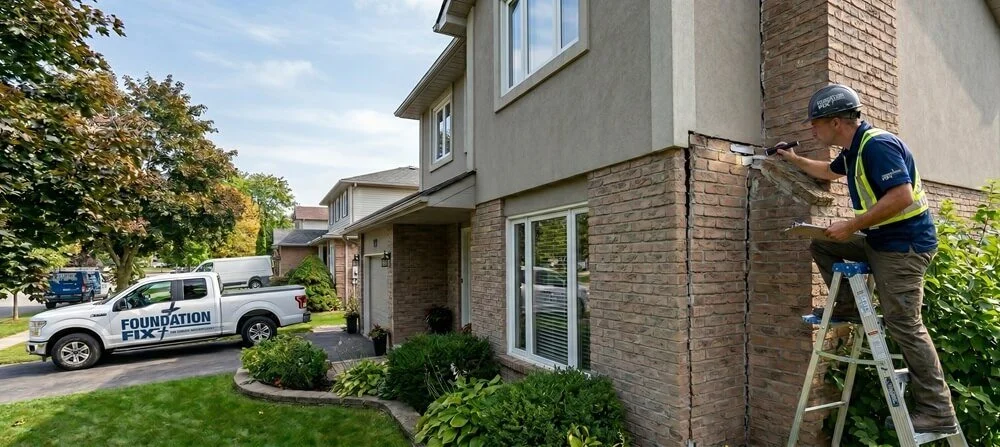
Whether you are dealing with a sinking concrete porch, a chimney leaning away from your home, or a growing gap between the porch and the house, the underlying issue is almost always related to soil instability. Understanding the cause and choosing the right repair method is critical for long-term structural safety.
Mind the Gap: Why is Your Porch or Chimney Moving?
When you see separation between structures, it usually means that one part of your home is settling at a different rate than another. Porches and chimneys are particularly vulnerable because they are often built on separate footings from the main foundation.
This differential movement leads to visible warning signs:
A widening gap between porch and house
Steps pulling away from the structure
A chimney leaning or tilting
Cracks in masonry or concrete
Doors or windows near the area sticking
In Niagara and similar regions of Canada, these problems are often accelerated by climate conditions. Freeze-thaw cycles cause soil to expand and contract, while heavy rainfall can wash away supporting material beneath foundations.
Ignoring these signs can lead to more serious structural issues over time, making early foundation settlement repair essential.
The Causes: Poor Soil Compaction and Water Erosion
At the core of most porch and chimney movement is unstable soil. Two primary factors contribute to this problem.
Poor Soil Compaction - During construction, the soil beneath a porch or chimney footing must be properly compacted. If it is not, the soil can compress over time under the weight of the structure. This leads to gradual settling, which is why a sinking concrete porch often develops years after a home is built.
Water Erosion and Drainage Issues - Water is one of the biggest threats to foundation stability. In areas like Niagara, where seasonal precipitation and snowmelt are significant, water can erode soil or cause it to shift.
Common contributors include:
Poor grading around the home
Downspouts discharging too close to the foundation
Saturated soil losing its load-bearing capacity
As the soil weakens or washes away, the unsupported structure begins to sink or tilt. This is especially dangerous for chimneys, which are tall, heavy, and often unsupported beyond their base footing.
The "Band-Aid" Fix: Mudjacking
When homeowners first notice settlement, they often look for a quick and cost-effective solution. One of the most common options is mudjacking, also known as slab jacking or concrete lifting.
This process involves pumping a slurry beneath the concrete to raise it back into position. While it can temporarily correct the appearance of a sinking concrete porch, it does not address the underlying soil problem.
Why Mudjacking Falls Short
Temporary solution: The injected material sits on the same unstable soil that caused the problem in the first place.
Adds weight: The slurry can actually increase pressure on weak soil, accelerating future settlement.
Not suitable for structural elements: Mudjacking is not ideal for stabilizing heavy structures like a chimney leaning away from the home.
Limited lifespan: Many homeowners find that the issue returns within a few years.
This is why the debate of concrete lifting vs piering is so important. While lifting may improve the look temporarily, it rarely provides a lasting fix for structural movement.
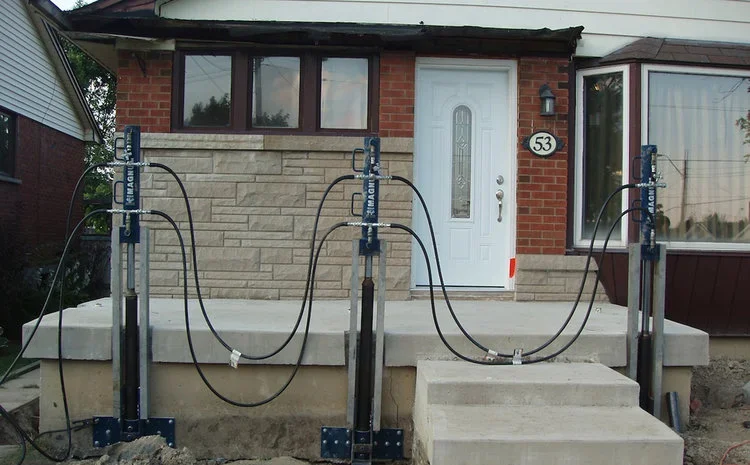
The Permanent Fix: Helical Piers
For a true long-term solution, helical piers are widely recognized across Canada as one of the most effective methods for foundation settlement repair.
Helical piers are steel shafts with helical plates that are mechanically screwed into the ground beneath the affected structure. They transfer the weight of the structure from unstable surface soil to deeper, load-bearing soil layers.
This makes them ideal for stabilizing both porches and chimneys, especially in regions like Niagara where soil conditions can vary significantly.
Using helical piers for porch repair or chimney stabilization provides reliable structural support Niagara homeowners can depend on for decades.
How Piers Reach Stable Soil
The effectiveness of helical piers lies in their installation method. Unlike surface-level fixes, piers are driven deep into the ground until they reach stable soil or bedrock.
Key advantages include:
Depth control: Installers continue advancing the pier until it reaches soil with sufficient load-bearing capacity.
Minimal disruption: Installation is relatively non-invasive compared to full excavation.
Immediate stability: Once installed, the pier provides instant support.
This approach bypasses the unstable upper soil layers entirely. Instead of trying to improve weak soil, the system transfers the load to ground that will not shift or compress.
The Lifting Process
Once the helical piers are securely in place, the next step is to lift and stabilize the structure.
Hydraulic jacks are used to carefully raise the porch or chimney back toward its original position. This process must be done gradually to avoid damaging the structure.
During lifting:
The gap between the porch and the house can often be reduced or eliminated
A chimney leaning can be corrected and secured
Cracks may close or become less severe
After lifting, the structure is permanently supported by the piers, preventing future settlement.
This is the key advantage in the concrete lifting vs piering comparison. Piering not only restores position but also solves the root cause of the problem.
Is it Safe to Wait?
Delaying repairs to a settling porch or chimney is risky. What may start as a small cosmetic issue can quickly escalate into a serious structural hazard.
Potential Risks Include:
Structural failure: A severely leaning chimney structure can collapse, posing safety risks to occupants.
Water infiltration: Gaps allow water to enter, leading to further erosion and potential basement issues.
Increased repair costs: The longer the problem persists, the more extensive and expensive the repair becomes.
Reduced property value: Visible structural issues can significantly impact resale value.
In Canadian climates, freeze-thaw cycles can accelerate damage once movement begins. Water entering cracks expands when frozen, widening gaps and worsening instability.
Addressing the issue early with proper foundation settlement repair is always more cost-effective than waiting for the damage to progress.
Contact Foundation Fix Today
A separating porch or leaning chimney is not something to ignore. These are clear indicators of underlying soil and foundation problems that require professional attention.
While temporary solutions like mudjacking may seem appealing, they do not provide lasting stability. For homeowners in Niagara and across Canada, helical piers offer a proven, permanent solution.
If you notice a sinking concrete porch, a gap between the porch and the house, or signs of a chimney leaning, contact Foundation Fix to discuss solutions for your foundation problems.


